- Pro
Optical clocks may replace caesium devices as the global standard for seconds
When you purchase through links on our site, we may earn an affiliate commission. Here’s how it works.
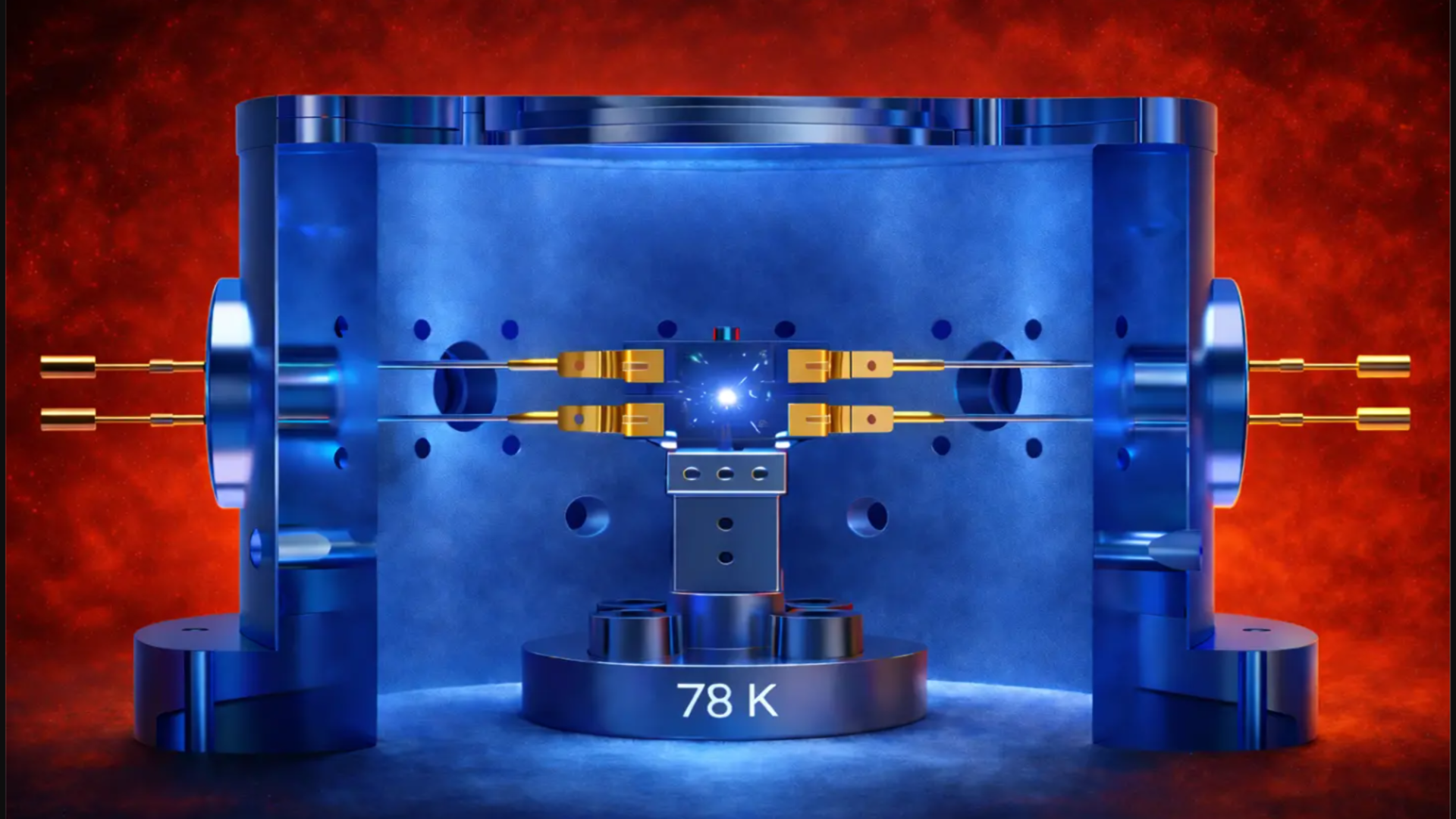 (Image credit: ITHome)
- Copy link
- X
- Threads
Sign up for breaking news, reviews, opinion, top tech deals, and more.
Contact me with news and offers from other Future brands Receive email from us on behalf of our trusted partners or sponsors By submitting your information you agree to the Terms & Conditions and Privacy Policy and are aged 16 or over.You are now subscribed
Your newsletter sign-up was successful
An account already exists for this email address, please log in. Subscribe to our newsletter- China’s strontium optical clock now participates directly in international atomic time calculation
- Optical clocks operate at higher frequencies than caesium, allowing finer measurement resolution
- Accuracy claims reach one second over billions or tens of billions of years
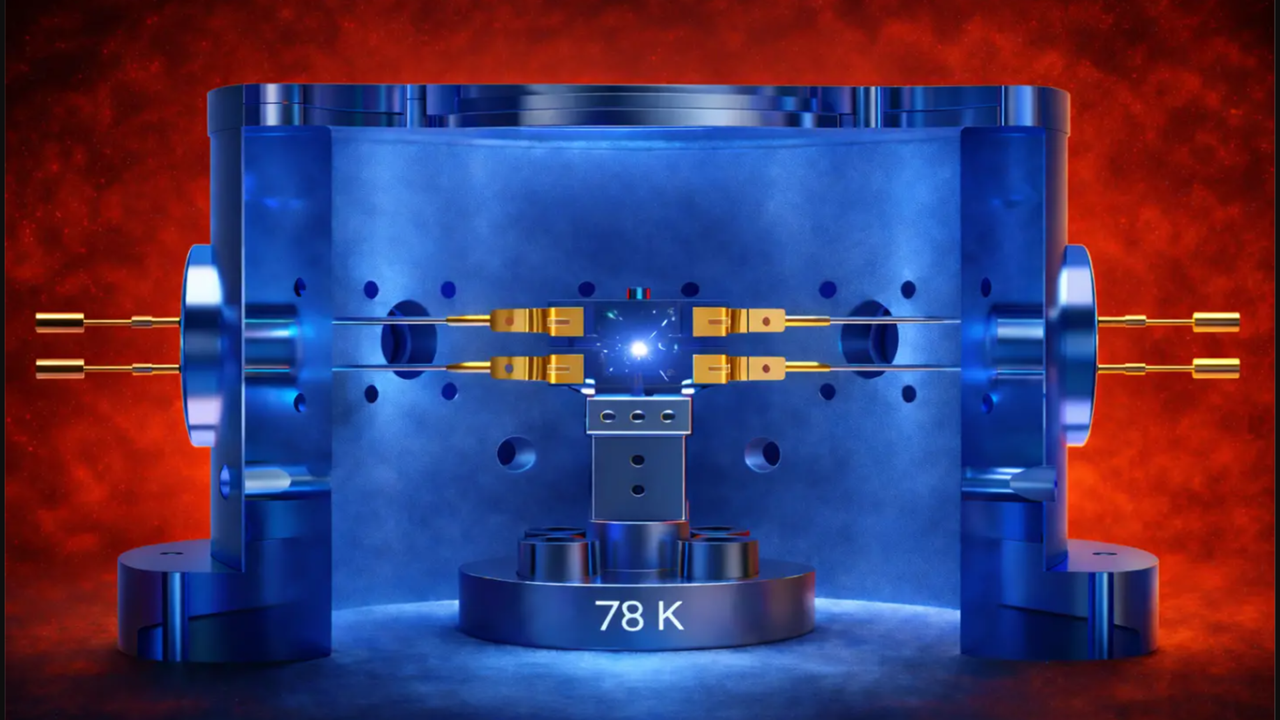
China has received formal international recognition for an ultra precise optical lattice clock after its calibration data was accepted into the global timekeeping system.
The approval allows the country’s NIM-Sr1 strontium atomic optical lattice clock to participate directly in the calculation of International Atomic Time, a role previously dominated by a few nations using caesium based standards.
This development shifts China from contributing data indirectly to becoming part of the core mechanism that defines global time.
You may like-
 Is the Internet's time wrong? NIST warns servers may have lapsed due to a power outage
-
 Not exactly a DeepSeek moment for AI accelerators - but this Chinese optical chip may well be 100x faster than Nvidia's A100 on some tasks
-
 Nvidia CEO warns about China's big AI advantages: construction and energy
Entry into international time calibration
The clock, developed by the National Institute of Metrology, passed review by the International Bureau of Weights and Measures, which oversees the global time standard.
Its data has now been incorporated into the system used to calculate international standard time, meaning the clock’s measurements are no longer experimental references but are actively used alongside other leading atomic clocks worldwide.
Such participation reflects a level of stability and repeatability which must be demonstrated consistently over extended periods.
Traditional caesium atomic clocks define the current international second and can remain accurate to within one second over hundreds of millions of years.
Are you a pro? Subscribe to our newsletterContact me with news and offers from other Future brandsReceive email from us on behalf of our trusted partners or sponsorsBy submitting your information you agree to the Terms & Conditions and Privacy Policy and are aged 16 or over.Optical clocks are important because they operate at much higher frequencies, enabling far greater measurement precision than caesium clocks, which in practical terms, this enables accuracy on the scale of one second over billions or even tens of billions of years, at least under controlled conditions.
Such precision exceeds what is required for everyday timekeeping, yet it becomes critical for advanced scientific and technical systems.
For instance, ultra-precise clocks are a backbone of satellite navigation, telecommunications synchronization, high frequency trading systems, and deep space exploration.
You may like-
Is the Internet's time wrong? NIST warns servers may have lapsed due to a power outage
-
Not exactly a DeepSeek moment for AI accelerators - but this Chinese optical chip may well be 100x faster than Nvidia's A100 on some tasks
-
Nvidia CEO warns about China's big AI advantages: construction and energy
Small timing errors can accumulate into large positional or coordination errors across global networks, and as systems become more interconnected and faster, the tolerance for timing drift continues to shrink.
Optical clocks are widely expected to replace caesium clocks as the basis for redefining the second in the future.
Participation in international calibration allows a country to influence how that transition unfolds, rather than adapt to standards set elsewhere.
It also provides redundancy in the global system, which relies on contributions from multiple independent laboratories to maintain stability.
Beyond civil applications, precise national timekeeping supports secure communications and independent operation during periods when international coordination may be disrupted.
In addition, this clock reduces dependence on any single clock and improves resilience in time measurement operations.
Via ITHome (originally in Chinese)
Follow TechRadar on Google News and add us as a preferred source to get our expert news, reviews, and opinion in your feeds. Make sure to click the Follow button!
And of course you can also follow TechRadar on TikTok for news, reviews, unboxings in video form, and get regular updates from us on WhatsApp too.
 Efosa UdinmwenFreelance Journalist
Efosa has been writing about technology for over 7 years, initially driven by curiosity but now fueled by a strong passion for the field. He holds both a Master's and a PhD in sciences, which provided him with a solid foundation in analytical thinking.
View MoreYou must confirm your public display name before commenting
Please logout and then login again, you will then be prompted to enter your display name.
Logout Read more Is the Internet's time wrong? NIST warns servers may have lapsed due to a power outage
 Not exactly a DeepSeek moment for AI accelerators - but this Chinese optical chip may well be 100x faster than Nvidia's A100 on some tasks
 Nvidia CEO warns about China's big AI advantages: construction and energy
 World internet speed record of 430,000Gbps achieved using bog-standard optic fiber cables, fast enough to download Battlefield 6 in one millisecond — new tech set to be critical in research for wireless 7G
 China has extracted 1000g of uranium from just seawater - targets "unlimited battery life" by 2050, tapping into 4.5 billion tons of aquatic uranium
 Nanometer-thick magnet produced at room temperature using lasers could one day produce better HDDs, faster non-silicon processors
Latest in Pro
Nanometer-thick magnet produced at room temperature using lasers could one day produce better HDDs, faster non-silicon processors
Latest in Pro
 Samsung says it “took the leap” with HBM4, as it starts shipping faster AI memory built on advanced process nodes
 Dynabook Tecra A65-M business laptop review
 Forget zero-days - 'N-days' could be the most worrying security threat facing your systems today, here's why
 Feeling swamped by all the different AI agent names? GoDaddy has a new plan for avoiding confusion
 'If someone can inject instructions or spurious facts into your AI’s memory, they gain persistent influence over your future interactions': Microsoft warns AI recommendations are being "poisoned" to serve up malicious results
 WP Engine-Automattic feud resurfaces with new claims of royalty fees and contract threats
Latest in News
WP Engine-Automattic feud resurfaces with new claims of royalty fees and contract threats
Latest in News
 Apple is rumored to be working on an iPhone Flip as well as an iPhone Fold
 'This is unacceptable' — SAG-AFTRA reacts with outrage to AI-generated Brad Pitt vs. Tom Cruise 'fight' clip
 Exclusive: Lego is bringing back the X-1 Ninja Charger for Ninjago’s 15th anniversary — and it hides a motorcycle inside
 My favorite League of Legends spin-off since Arcane just got even better
 Jon Favreau says The Mandalorian & Grogu had to “up our game” for theaters
 ICYMI: the week's 7 biggest tech news stories for February 14, 2026.
LATEST ARTICLES
ICYMI: the week's 7 biggest tech news stories for February 14, 2026.
LATEST ARTICLES- 1'1 second in tens of billions of years': China's ultra-precise optical lattice clock gets international recognition as it challenges US hegemony on time
- 2My favorite League of Legends spin-off since Arcane just got even better
- 3No Resident Evil Requiem demo? Frustrating, but it’ll be worth the wait
- 4Quordle hints and answers for Sunday, February 15 (game #1483)
- 5NYT Connections hints and answers for Sunday, February 15 (game #980)